«Νυρεμβέργη: Η Δίκη που άλλαξε την Ιστορία» – Έκθεση φωτογραφίας στην Καλαμαριά
30/10 - 2/11
Με αφορμή την επέτειο της 28ης Οκτωβρίου, η Καλαμαριά φιλοξενεί μια έκθεση φωτογραφίας αφιερωμένη στη Δίκη της Νυρεμβέργης (1945–1946), μία από τις σημαντικότερες στιγμές στην ιστορία της διεθνούς δικαιοσύνης.
Η έκθεση, με τίτλο «Νυρεμβέργη: Η Δίκη που άλλαξε την Ιστορία», διοργανώνεται από τον Σύνδεσμο Ελληνορωσικής Φιλίας, σε συνεργασία με το Ρωσικό Κέντρο Ιστορικής Μνήμης, υπό την αιγίδα του Δήμου Καλαμαριάς, και θα φιλοξενηθεί στην Αίθουσα Τέχνης Remezzo από την Παρασκευή 30 Οκτωβρίου έως τη Δευτέρα 2 Νοεμβρίου.
Μέσα από σπάνιο φωτογραφικό υλικό από τη δίκη κορυφαίων στελεχών του ναζιστικού καθεστώτος, η έκθεση αναδεικνύει τη σημασία της ιστορικής μνήμης και της λογοδοσίας για τα εγκλήματα του Β΄ Παγκοσμίου Πολέμου, ενώ ιδιαίτερη αναφορά γίνεται στις ναζιστικές θηριωδίες στην Ελλάδα.
Τα εγκαίνια θα πραγματοποιηθούν την Παρασκευή 30 Οκτωβρίου, στις 17:00, με εναρκτήριο χαιρετισμό από τη Δήμαρχο Καλαμαριάς, Χρύσα Αράπογλου. Χαιρετισμούς θα απευθύνουν ο Υφυπουργός Εσωτερικών (Μακεδονίας και Θράκης), Κωνσταντίνος Γκιουλέκας, και ο Γενικός Πρόξενος της Ρωσίας στη Θεσσαλονίκη, Βλαντιμίρ Μπρέντνεφ.
Στο πλαίσιο της εκδήλωσης θα πραγματοποιηθούν ομιλίες και παρεμβάσεις για τα Ολοκαυτώματα του Χορτιάτη, του Διστόμου και του Μεσοβούνου Εορδαίας, με τη συμμετοχή της Αντιδημάρχου Πολιτισμού και Τουρισμού Πυλαίας-Χορτιάτη, Βίκυς Κανέλλου, του Δημάρχου Διστόμου-Αράχωβας-Αντίκυρας, Ιωάννη Σταθά, και του Προέδρου της Κοινότητας Μεσοβούνου, Παύλου Παραστατίδη.
Παράλληλα, θα προβληθεί οπτικοακουστικό υλικό για τα ναζιστικά εγκλήματα στην Ελλάδα, με αναφορές στον Χορτιάτη, το Δίστομο, το Μεσόβουνο Εορδαίας και τα Νέα Κερδύλια.
Εν αρχή ην ο Σπύρος Κουλκουδίνας. Και φαρμακοποιός, και επιχειρηματίαςτουρισμού, και βουλευτής της Δεξιάς στην Πιερία, και δράστης των γνωστών συμβουλών σε όσους δεν έχουν δέκα ευρώ για να βάλουν βενζίνη. Ο οποίος είχε καλή ψαριά στη θάλασσα των ευρωπαϊκών κονδυλίων. Εν συνεχεία είναι οι έντιμοι λειτουργοί του επιτελικού κράτους που υπέγραψαν να λάβει ο εν λόγω τα διακόσια χιλιάρικα από την τσέπη των ψαράδων για τους οποίους τα προόριζε η Ευρώπη.
Εν συνεχεία είναι οι κεφαλές του κράτους μας, αρμόδιοι και αυτουργοί, έως πρωθυπουργού, που παρακολουθούν για μέρες τον βουλευτή τους να θαλασσοπνίγεται σε κύματα καταγγελιών και αποκαλύψεων και παριστάνουν το ψάρι. Ούτε μια λέξη υποστήριξης! Διότι, μην είμεθα εμπαθείς. Εχει ανάγκη συμπαράστασης ο Κουλκουδίνας. Ο άνθρωπος βιοπορίζεται, κατά δήλωσή του, σε αρμονία με το επιτελικό κράτος και τις ηθικές προδιαγραφές του.
Το γεγονός ότι στα ψαράδικα κονδύλια της Πιερίας συγκαταλέγονται πελάτες με βίλες, πισίνες, ξενυχτάδικα, ενοικιαζόμενα και γιοτ πολυτελείας, βεβαιώνει του λόγου το ασφαλές: Αυτή είναι η κανονικότητα που έχει καθιερώσει η διακυβέρνηση Μητσοτάκη. Και θα σου πει δικαίως ο κάθε Κουλκουδίνας: Εγώ φταίω που τα πήρα ή αυτοί που τα μοιράζουν; Και μήπως εγώ είμαι ο μόνος κλέφτης του Αλή Μπαμπά, που τρώει και πίνει στο σαράι του Μαξίμου; Εδώ έχουμε σαράντα μόνο στην Πιερία και αν υπολογίσουμε την υπόλοιπη χώρα, Κύριος οίδε πόσοι και πόσα εισέπραξαν από τα λεφτά των ψαράδων. Και όχι μόνο.
Πείτε ότι πάει αύριο κατηγορούμενος. Δεν γίνονται αυτά σε ένα κράτος δικαίου όπως η Ελλάδα, αλλά το λέμε χάριν συζητήσεως. Δεν θα πει ότι είναι θύμα πλεκτάνης του Τσίπρα; Δηλαδή, φταίνε οι μανάβηδες που πουλούσαν μάσκες και υγειονομικό υλικό στο κράτος τον καιρό της πανδημίας πέντε φορές πάνω από την τιμή τους; Οι παραγωγοί των αλήστου μνήμης σκόιλ ελικίκου, που είχαν αναλάβει να μας μορφώνουν με κολοσσιαίες αμοιβές; Οι νομείς του ΟΠΕΚΕΠΕ που με μια υπογραφή πήραν δέκα, είκοσι και εκατό χιλιάρικα; Τα κλέψαμε, κύριε; Διαπράξαμε ληστεία; Νόμιμα δεν τα εισπράξαμε; Γιατί λοιπόν να την πληρώνει τώρα ο Κουλκουδίνας, όταν όσα έκανε και νόμιμα υπήρξαν, και έλαβαν χώρα με τις απαραίτητες επιτελικές διαδικασίες;
Ας μη διαταράσσουμε λοιπόν την ελεύθερη και πλούσια ζωή του Κουλκουδίνα και την αρμονία των σχέσεων του κράτους Μητσοτάκη με την αξιότιμη πελατεία του. Ας μην πολιτικοποιούμε μια υπόθεση ρουτίνας, όπως είπε κάποιος εξέχων παράγων του συστήματος. Αλλωστε τι είναι τα διακόσια χιλιάρικα του ευφυούς βουλευτή μπροστά στα δισεκατομμύρια που τσεπώνουν οι ευεργέτες της ενέργειας, των τραπεζών, των σούπερ μάρκετ;
Οι αυτουργοί των συμβουλευτικών; Ακόμα και μπροστά στην «μπάζα» που βρέθηκε στην κατοχή διαιτητών του μπάσκετ ή όσα έφαγε από το κράτος η πίτσα των ονείρων μας; Ας αφήσουμε λοιπόν ήσυχους τους πελάτες και ας προσγειωθούμε στην κανονικότητα. Μη γίνουμε και Γαλλία… Εξάλλου έρχεται η μέρα που πάλι θα μας πουν ότι μαζί τα φάγαμε…
Το «Ανοιχτό Γράμμα» του Ζαχαριάδη, το οποίο απηύθυνε στις 31 Οκτώβρη 1940, καλώντας τον ελληνικό λαό να πολεμήσει τον ιταλικό φασισμό, υπήρξε μια αναμφισβήτητα θετική πρωτοβουλία του τότε ηγέτη του ΚΚΕ
Το «Ανοιχτό Γράμμα» του Ζαχαριάδη, το οποίο απηύθυνε στις 31 Οκτώβρη 1940, καλώντας τον ελληνικό λαό να πολεμήσει τον ιταλικό φασισμό, υπήρξε μια αναμφισβήτητα θετική πρωτοβουλία του τότε ηγέτη του ΚΚΕ. Κατέδειξε έμπρακτα σε μια κρίσιμη ιστορική στιγμή τον ειλικρινή πατριωτισμό των κομμουνιστών.
Το «Γράμμα» έχει γίνει τα τελευταία χρόνια στόχος επιθέσεων από την ηγεσία του ΚΚΕ, που το αποκηρύσσει ως παρέκκλιση από τον «κομμουνιστικό, διεθνιστικό δρόμο». Στην έκδοση του Τμήματος Ιστορίας του ΚΚΕ «Το ΚΚΕ στον ιταλοελληνικό πόλεμο 1940-41», υποστηρίζουν ότι ο Β΄ Παγκόσμιος Πόλεμος ήταν ιμπεριαλιστικός ακόμη και μετά τη ναζιστική επίθεση στην ΕΣΣΔ (σελ. 17-18). Επικρίνοντας την Κομιντέρν που τον εκτίμησε ως «αμυντικό» από μέρους της Ελλάδας, αποφαίνονται ότι η Ελλάδα ήταν ιμπεριαλιστική χώρα, καθώς «ο ιμπεριαλιστικός χαρακτήρας ενός κράτους δεν καθορίζεται από το μικρό του μέγεθος ή από την υποδεέστερη θέση του στο διεθνές ιμπεριαλιστικό σύστημα» (σελ. 146-147). Δικαιώνουν έτσι τα δυο επόμενα «Γράμματα» του Ζαχαριάδη, που υπονόμευσαν την αρχική του θέση, των οποίων «η επιβεβαίωση… ήρθε πολύ γρήγορα» (σελ. 203).
Και μόνο τα παραπάνω επιχειρήματα των δογματιστών αποδεικνύουν την πολιτική ορθότητα του «Ανοιχτού Γράμματος» του Ζαχαριάδη. Αν για να το καταδικάσουμε πρέπει να πούμε ότι συνολικά ο Β΄ Παγκόσμιος ήταν ιμπεριαλιστικός και η Ελλάδα έκανε ιμπεριαλιστικό πόλεμο ενάντια στη φασιστική Ιταλία, τότε ξεκάθαρα κανένας νοήμων προοδευτικός άνθρωπος δεν θα το πει αυτό. Η Ελλάδα το 1940-41 έκανε έναν εθνικό πόλεμο, κάτι που ο Λένιν είχε αναγνωρίσει για μικρές χώρες όπως η Σερβία ακόμη και στον ιμπεριαλιστικό Α΄ Παγκόσμιο. Και ο Β΄ Παγκόσμιος, το 90% του βάρους και των απωλειών του οποίου επωμίστηκαν η ΕΣΣΔ και τα κινήματα αντίστασης, ήταν αντιφασιστικός.
Αλλά υπάρχει και κάτι άλλο. Υποστηρίζοντας ότι ο Β΄ Παγκόσμιος ήταν ιμπεριαλιστικός και η Ελλάδα έκανε ιμπεριαλιστικό πόλεμο, οι δογματιστές αποκηρύσσουν, χωρίς να το καταλαβαίνουν, το ΕΑΜικό κίνημα. Αν πραγματικά ισχύει αυτό, προκύπτει ότι οι 200 της Καισαριανής και τόσοι άλλοι εκτελεσμένοι κομμουνιστές, στο όνομα των οποίων μιλούν, πολεμώντας τον φασισμό είχαν παραπλανηθεί και έπαιζαν το παιχνίδι των ιμπεριαλιστών. Τότε θα έπρεπε να απόσχουν από τον πόλεμο για να στραφούν ενάντια στην ελληνική αστική τάξη – κάτι που φυσικά μπορούσε άνετα να γίνει το 1945, όταν το ΕΑΜ είχε όλο τον λαό με το μέρος του, αλλά η ηγεσία του ΚΚΕ έκανε Βάρκιζες.
Η τραγωδία του Ζαχαριάδη δεν βρίσκεται στο «Ανοικτό Γράμμα» αλλά στην αποτυχία του να το συνεχίσει όπως ο Τίτο στη Γιουγκοσλαβία. Για να το κάνει θα έπρεπε να στηρίξει τον Αρη Βελουχιώτη μετά την επιστροφή του στην Ελλάδα το 1945 και αργότερα, στη διάρκεια του αγώνα του ΔΣΕ, να συνταχτεί με τον Τίτο ενάντια στον Στάλιν. Ο αρχηγισμός του Ζαχαριάδη τον έκανε, ωστόσο, να μαζεύει γύρω του υποτακτικούς, τυφλούς λακέδες. Και αν έτσι εδραίωνε τη θέση του, γινόταν ταυτόχρονα δέσμιός τους, με τα γνωστά καταστροφικά για το κίνημα λάθη και αποτελέσματα: αποχή από τις εκλογές το 1946, ψεύδη για το δήθεν πισώπλατο χτύπημα του Τίτο, συκοφάντηση αργότερα των Καραγιώργη και Πλουμπίδη, που οι δογματιστές τα δικαιώνουν σήμερα ως κορυφαίες «κομματικές συμβολές».
Ο Ερρίκος Χάινε, στο ποίημά του «Η κομματικότητα» σατίρισε έξοχα τους φωνακλάδες ψευτο-επαναστάτες του καιρού του:
Βούιξε, βέλαξε, βρόντηξε, άνθρωπε –
Μέχρι να τραπεί σε φυγή και ο τελευταίος καταπιεστής!
Κάνε τη ρίμα σου γερή και καυστική…
Αλλά φρόντισε να διατηρήσεις τη γραφή σου
όσο γίνεται πιο γενική.
Όσοι σήμερα αποκηρύσσουν μια φωτεινή στιγμή του Ζαχαριάδη, δικαιώνοντας ό,τι σκοτεινό και φαύλο παρήγαγε ο αρχηγισμός του, αποδεικνύουν ότι ξέρουν μόνο να βελάζουν. Ολοι οι έντιμοι, σκεπτόμενοι αριστεροί θα εκτιμούν το «Ανοικτό Γράμμα» σαν μια θετική συμβολή στο ελληνικό κομμουνιστικό και αντιφασιστικό κίνημα.
Η ταινία αφηγείται την ιστορία ενός σωβινιστή αριστοκράτη που επιδεικνύει την ερωμένη του στη σύζυγο του, αλλά όταν υποψιάζεται ότι και αυτή ήταν άπιστη, την ερωτεύεται ξανά. Ήταν η τελευταία ταινία του Βισκόντι, που κυκλοφόρησε τρεις μήνες μετά τον θάνατό του, τον Μάρτιο του 1976.
Πλοκή
Στα τέλη της δεκαετίας του 1890, ο Τούλιο Χέρμιλ είναι ένας πλούσιος Ρωμαίος αριστοκράτης. Έχει μια κτητική αριστοκρατική ερωμένη, την Τερέζα Ράφο, και παραμελεί τη γυναίκα του, Τζουλιάνα. Το ενδιαφέρον του για τη σύζυγό του αναζωπυρώνεται όταν βλέπει την ευτυχία της Τζουλιάνα αφού αυτήν έχει ξεκινήσει μια ερωτική σχέση με έναν μυθιστοριογράφο, τον Φίλιπο ντ' Αρμπόριο, με τον οποίο μένει έγκυος. Ο Τούλιο προτρέπει την σύζυγό του να κάνει άμβλωση αλλά εκείνη το αρνείται. Στη συνέχεια, ο ντ' Αρμπόριο πεθαίνει από επιπλοκές από ελονοσία.
Ο Τούλιο δεν μπορεί να ανεχθεί το υγιές αρσενικό παιδί που παραδόθηκε στη Τζουλιάνα, αν και προσπαθεί.
Μετά τις πρόσφατες αποφάσεις του Ντόναλντ Τραμπ (Φεβρουάριος 2025) να χαρακτηρίσει τα μεξικανικά καρτέλ ως ξένες τρομοκρατικές οργανώσεις, ο όρος «ναρκο-τρομοκρατία» επανήλθε στο προσκήνιο της διεθνούς πολιτικής ατζέντας και ρητορικής. Όρος που χρησιμοποιείται συχνά καταχρηστικά και κυρίως για την εξυπηρέτηση πολιτικών και στρατηγικών σκοπών από πολιτικούς ηγέτες αλλά και από μέσα ενημέρωσης, η «ναρκο-τρομοκρατία» περιγράφει το σύμπλεγμα οργανωμένου εγκλήματος μέσω της διακίνησης ναρκωτικών και της σύγχρονης τρομοκρατίας. Η στοχοποίηση μη κρατικών αλλά και θεσμικών δρώντων (όπως στην περίπτωση του πρώην Προέδρου της Βενεζουέλας Νικολάς Μαδούρο από τις ΗΠΑ) αποτελεί κύριο σκοπό για την αναβάθμιση των κυρώσεων, καθώς και των νομικών και στρατιωτικών εργαλείων, με στόχο την καταπολέμηση και την απομόνωσή τους από τη διεθνή κοινότητα.
Στο βιβλίο, που αποτελεί προϊόν πρωτογενών (έρευνα πεδίου) και δευτερογενών πηγών, αναδεικνύουμε αρχικά τις έννοιες και τους όρους που οδηγούν σε αυτό το σύμπλεγμα και επιχειρούμε να αποδομήσουμε εμπειρικά την απλουστευμένη και στοχοποιημένη χρήση του όρου, μέσα από την ανάδειξη και τη μελέτη συγκεκριμένων περιπτώσεων (π.χ. μεξικανικά και κολομβιανά καρτέλ, αντάρτικες οργανώσεις στη Λατινική Αμερική, Ταλιμπάν, Χεζμπολάχ κ.ά.).
Μοναδική στο είδος της στην ελληνική βιβλιογραφία (και από τις ελάχιστες στη διεθνή), η μελέτη αναλύει τις διάφορες εκφάνσεις του φαινομένου, τους κύριους δρώντες και τις πολύμορφες διαστάσεις που λαμβάνει σε διαφορετικές γεωγραφικές ζώνες. Οι αναγνώστριες και οι αναγνώστες θα εισαχθούν σε βασικούς όρους, όπως οι «γκρίζες ζώνες», καθώς και στην καταγραφή φαινομένων όπως η παραγωγή και η διακίνηση συνθετικών ναρκωτικών ουσιών (φαιντανύλη, Captagon κ.ά.), αλλά και στις παραμέτρους των οδών διακίνησής τους μέχρι τον τελικό τους προορισμό στις δυτικές κοινωνίες.
"Το Παλτό" (ρωσ. "Шинель", 1842) είναι ένα από τα πιο γνωστά διηγήματα του Ρώσου συγγραφέα Νικολάι Γκόγκολ και θεωρείται ένα σημαντικό έργο της ρωσικής λογοτεχνίας. Ανήκει στη συλλογή "Διηγήματα από την Αγία Πετρούπολη" και συνδυάζει ρεαλιστικές και γκροτέσκο λεπτομέρειες δοσμένες με υπερφυσικό τρόπο .
Στο Παλτό στηλιτεύεται η απανθρωπιά της κοινωνίας , κυρίως η αδιαφορία και την κυνικότητα της αστικής τάξης, που αδιαφορεί για τους αδυνάμους , τους εκμεταλλεύεται και τους εγκαταλείπει στη μοίρα τους.
Το ένδυμα αυτό δεν παρέχει μόνο ζεστασιά , αλλά έχει συμβολικό χαρακτήρα για τον ήρωα του έργου, αφού του δίνει την ψευδαίσθηση ότι μετέχει σε έναν κόσμο στον οποίο δεν ανήκει (αίσθημα υπεραναπλήρωσης). Γι΄αυτό η απώλειά του τον επαναφέρει στη ζοφερή πραγματικότητα και τον οδηγεί στη συντριβή του.
Το υπερφυσικό στοιχείο με τον ήρωα ως φάντασμα που καταδιώκει και αφαιρεί το παλτό από τους περαστικούς τονίζει την αδικία που δεν διορθώθηκε εν ζωή. Ο συγγραφέας με τον έξοχο αυτό τρόπο μας οδηγεί στην κορυφαία σκηνή του έργου , όπου τελικά εκδικείται τον αξιωματούχο που τον αγνόησε.
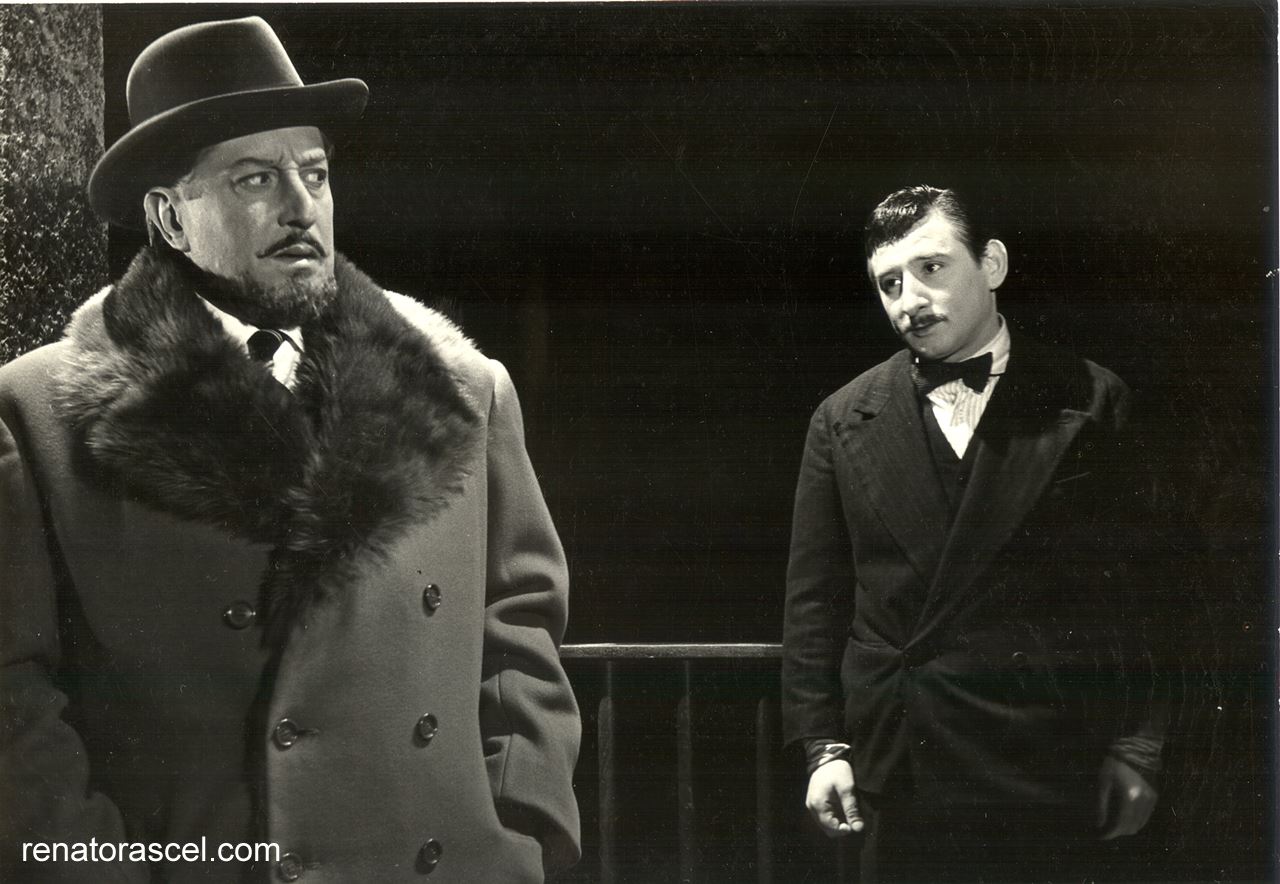
Il cappotto/ Το παλτό (1952): θαυμάσια μεταφορά του διηγήματος στον κινηματογράφο
Il Cappotto (Το παλτό 1952) Alberto Lattuada
7.5
Renato Rascel, Yvonne Sanson, Giulio Stival .
Πρόκειται για μια ταινία που βασίζεται στην ιστορία του Νικολάι
Γκόγκολ, που μεταφέρει τη δράση από τη Ρωσία του παρελθόντος στην Ιταλία
του 1952. Il Cappotto (The Overcoat) (1952)
Σκηνοθεσία: Alberto Lattuada
Σενάριο: Alberto Lattuada, Giorgio Proseri, Giordano Corsi
«Ένας φουκαριάρης υπάλληλος του δήμου έχει ως μεγάλο όνειρο να
αγοράσει ένα ωραίο παλτό, το οποίο και τελικά αποκτά. Έτσι κερδίζει νέες
γνωριμίες, αποκτά κομψότητα, αλλά του κλέβουν το ένδυμα. Παράλληλα,
βιώνει και διάφορες περιπέτειες με τη δουλειά του: Απολύεται,
επαναπροσλαμβάνεται, ο Δήμαρχος είναι πολύ αυταρχικός. Ακολουθούν
εξελίξεις…
Πρόκειται για μια εξαιρετικά διεισδυτική ματιά του έμπειρου Λατουάντα,
που ξεπερνάει τα όρια της σάτιρας και φτάνει σε μια κατάμαυρη καφκική
σουρεαλιστική αλληγορία. Είναι ένα στιλ που μας θυμίζει Φερέρι,
Μπουνιουέλ, Ριπστάιν (και στο βάθος... Λάνθιμο).
Η ατμόσφαιρα είναι
υποδειγματική, με την ασπρόμαυρη και μουντή φωτογραφία, που έρχεται
από τα βάθη του γερμανικού εξπρεσιονισμού και επιβάλλει όλο αυτό το
ζοφερό παράλογο κλίμα.
"Το παλτό" στέκεται επάξια δίπλα στη "Δίκη" και η μεταφυσική τελική του
απόκλιση, ουσιαστικά απομονώνοντας ένα ενοχικό σύμπαν, σε επιστρέφει στο
παρόν.
Ο Αλμπέρτο Λατουάντα δεν το έκρυψε ποτέ πως είναι
ένας κοινωνιστής σκηνοθέτης και μάλιστα κορυφαίος!
Ταινίες που πλησιάζουν την προβληματική αυτού του φιλμ είναι : «Το
παλτό» (1926) του Γκριγκόρι Κοζίντσεφ και Λεονίντ Τράουμπεργκ, «Το
παλτό»(1959) του Αλεξέι Μπατάλοφ, «The Bespoke Overcoat» (1955) του Τζακ
Κλέιτον και «Η δίκη» (1962) του Όρσον Γουέλς.»
«Αρχαιολογία και Κατοχή»: Τι έγινε στο συνέδριο που προκάλεσε σάλο με τη ναζιστική σημαία στην Ακρόπολη
Κατερίνα Αγγελιδάκη
tovima.gr
Φωτό: Λεωνίδας Παναγόπουλος
Το συνέδριο «Αρχαιολογία και Κατοχή» προκάλεσε θύελλα πριν ξεκινήσει. Στις εργασίες του ήρθαν στο φως νέα στοιχεία για τον ναζιστή διευθυντή του Γερμανικού Αρχαιολογικού Ινστιτούτου Βάλτερ Βρέντε και τις λεηλασίες αρχαιοτήτων στην Ελλάδα του 1941-1944.
Βάλτερ Βρέντε (1893-1990).
Το συνέδριο «Αρχαιολογία και Κατοχή» προκάλεσε θύελλα πριν ξεκινήσει. Στις εργασίες του ήρθαν στο φως νέα στοιχεία για τον ναζιστή διευθυντή του Γερμανικού Αρχαιολογικού Ινστιτούτου Βάλτερ Βρέντε και τις λεηλασίες αρχαιοτήτων στην Ελλάδα του 1941-1944.
«Στις 27 Απριλίου 1941 οι Γερμανοί στρατιώτες ύψωσαν τη σβάστικα πάνω στην Ακρόπολη. Η εικόνα της είναι οδυνηρά ξεκάθαρη: Το Τρίτο Ράιχ πάνω στον Παρθενώνα. Η Γερμανία είχε καταλάβει ένα μνημείο που η Ευρώπη είχε επιλέξει ως το επίσημο πιστοποιητικό της γέννησής της. Οι κατακτητές αναζήτησαν αμέσως στήριγμα στο παρελθόν. Ο Χίτλερ είχε προετοιμάσει το γενεαλογικό δέντρο». Με αυτή την εισαγωγή άνοιξε τις εργασίες του 3ήμερου διεθνούς συνεδρίου «Αρχαιολογία και Κατοχή. Ελλάδα 1941–1944» ο διευθυντής της Ιταλικής Αρχαιολογικής Σχολής, Δρ. Εμανουέλε Πάπι.
Το συνέδριο -που ολοκληρώθηκε στις 17 Οκτωβρίου και οργανώθηκε από το Εθνικό Ίδρυμα Ερευνών, το Γερμανικό Αρχαιολογικό Ινστιτούτο (DAI) και την Ιταλική Αρχαιολογική Σχολή- προκάλεσε μεγάλο θόρυβο πριν ξεκινήσει και ηχηρές αντιδράσεις που έφτασαν μέχρι τη Βουλή. Αιτία του τεταμένου κλίματος ήταν η προκλητική αφίσα του συνεδρίου, που απεικόνιζε τη ναζιστική σημαία στην Ακρόπολη, σε συνδυασμό με τον προβοκατόρικο τίτλο της εισήγησης του Γαλλογερμανού ιστορικού Βαλεντίν Σνάιντερ: «Μακάρι να ήμουν εκεί όταν υψώθηκε η σημαία στην Ακρόπολη. Ορίζοντες της φαντασίας και πραγματικότητα της γερμανικής Κατοχής στην Ελλάδα».
Μετά το σάλο που προκλήθηκε και τις αντιδράσεις από το Εθνικό Συμβούλιο Διεκδίκησης Οφειλών της Γερμανίας στην Ελλάδα, το Σύλλογο Μνήμης και Δράσης Μανώλης Γλέζος, τα ΜΜΕ και τα Μέσα Κοινωνικής Δικτύωσης, η ατυχής αφίσα του συνεδρίου αντικαταστάθηκε με παρέμβαση του ΥΠΠΟ και της υπουργού Λίνας Μενδώνη.
Σε επικοινωνία μας πριν από την έναρξη του συνεδρίου, με τη Δρα Κάτια Σπορν, διευθύντρια του Γερμανικού Αρχαιολογικού Ινστιτούτου στην Αθήνα, τη ρωτήσαμε αν το Ινστιτούτο όφειλε να είχε προβλέψει τις αντιδράσεις, με δεδομένο ότι οι πληγές της Κατοχής είναι ακόμα νωπές. «Οι αρχαιολόγοι και οι ιστορικοί γνωρίζουν αυτές τις εικόνες διότι αποτελούν τεκμήρια. Έτσι τα βλέπουμε. Και ο τίτλος της εισήγησης ήταν επίσης τεκμήριο, πρόκειται για φράση από επιστολή Γερμανού στρατιώτη. Καταλαβαίνω όμως ότι ένα ευρύτερο κοινό που δεν βλέπει την επεξηγηματική υποσημείωση στην εικόνα ούτε τα εισαγωγικά στον τίτλο της εισήγησης, μπορεί να ενοχληθεί», απάντησε προσθέτοντας: «Το DAI είναι ερευνητικό ινστιτούτο και μελετάμε το παρελθόν μας με ειλικρίνεια και σαφήνεια. Δεν ήταν στις προθέσεις μας ούτε να ενοχλήσουμε ούτε να θίξουμε κανέναν».
[Credit: Λεωνίδας Παναγόπουλος]
Τι είπε τελικά ο Βαλεντίν Σνάιντερ
Την επιστημονική στήριξή τους προς τον εισηγητή που ξεσήκωσε τη θύελλα παρείχαν τόσο ο Εμανουέλε Πάπι, όσο και ο Διευθυντής του Ινστιτούτου Ιστορικών Ερευνών του ΕΙΕ καθηγητής Νικόλαος Παπαζαρκάδας, ο οποίος αναφέρθηκε σε «άδικες επιθέσεις εναντίον ενός μακρόχρονου συνεργάτη του ΕΙΕ», παρουσία του Γερμανού Πρέσβη Αντρέα Κιντλ. Απαντώντας στην αντιπαράθεση ο Ιταλός διευθυντής υπογράμμισε: «Η μελέτη ντοκουμέντων, φωτογραφιών και αρχείων δεν σημαίνει την υιοθέτησή τους. Η παράθεση αποσπάσματος δεν σημαίνει ότι συμφωνούμε με αυτό. Τα εισαγωγικά συχνά περνούν απαρατήρητα, αλλά για τους ιστορικούς είναι πολύ σημαντικά. Το περιεχόμενο δεν δικαιολογεί, εξηγεί».
Όταν ανέβηκε στο βήμα ο Βαλεντίν Σνάιντερ αναφέρθηκε στην επίμαχη φράση: «Γράφτηκε στις 27 Απριλίου 1941 σε επιστολή του Γερμανού υπολοχαγού Χέλμουτ Χένζελ, ο οποίος σημείωνε ενθουσιασμένος: “Μόλις έφτασαν τα νέα ότι τα πρώτα τανκς μπήκαν στην Αθήνα. Δεν είναι υπέροχο; Μακάρι να ήμουν εκεί όταν υψώθηκε η σημαία στην Ακρόπολη. Τι να έχουν δει αυτοί οι βράχοι μέσα στην ιστορία”».
Ο Σάιντερ υποστήριξε ότι «η έντονη ιδεολογικοποίηση στην αναδημιουργία του γερμανικού ιδεώδους για την Ελλάδα από το ναζιστικό καθεστώς αρχικά δημιούργησε πολύ υψηλές προσδοκίες ανάμεσα τους στρατιώτες» αλλά αργότερα, όπως εξήγησε, η πραγματικότητα του πολέμου «οδήγησε σε βαθιά διάψευση, την οποία με τη σειρά της διόγκωσε η γερμανική προπαγάνδα. Η απογοήτευση αυτή δημιούργησε το γόνιμο έδαφος για να νομιμοποιηθούν ακραία εγκλήματα».
Αξίζει να σημειωθεί ότι σε άλλο σημείο της συνεδρίασης έγινε αναφορά στη φράση του Χίτλερ «Όταν μας ρωτούν ποιοι είναι οι πρόγονοί μας, πρέπει πάντα να δείχνουμε τους Έλληνες», όπως την κατέγραψε τον Ιανουάριο του 1942 στενός συνεργάτης του.
Μεταξύ των πηγών που παρέθεσε ο Σνάιντερ ήταν ένα κυνικό απόσπασμα από επιστολή άλλου Γερμανού στρατιώτη και μέλους του ναζιστικού κόμματος, γραμμένη στις 9 Ιανουαρίου 1942, στην καρδιά του φονικού λιμού της Αθήνας, το οποίο αποδεικνύει πόσο γρήγορα η ρατσιστική ναζιστική ιδεοληψία με τους αρχαίους Έλληνες αντικαταστάθηκε από την απόλυτη περιφρόνηση απέναντι στον κατεχόμενο πληθυσμό: «Στους δρόμους κυκλοφορούν άνθρωποι που μπορείς να καταλάβεις ότι οι ώρες τους είναι μετρημένες. Αν περπατήσεις 200 μέτρα πιο κάτω στο δρόμο, θα βρεις σίγουρα έναν άνθρωπο στα τελευταία του. Δεν υπάρχει οίκτος εκεί, το ήθελαν έτσι. Αυτόν τον πληθυσμό μπορείς να τον κρατήσεις σε απόσταση μόνο μέσω της βίας». Οι Έλληνες, έφταιγαν, σύμφωνα με τον Γερμανό κατακτητή, για την εξαθλίωση στην οποία τους οδήγησε η πείνα, το δριμύ χειμωνιάτικο ψύχος και η ναζιστική βαρβαρότητα στην κατεχόμενη χώρα μας.
[Credit: Λεωνίδας Παναγόπουλος]
Η δράση του διαβόητου διευθυντή του DAI Βάλτερ Βρέντε
Κατά τη διάρκεια του συνεδρίου ήρθαν στο φως νέα στοιχεία για τη δράση του διαβόητου διευθυντή του Γερμανικού Αρχαιολογικού Ινστιτούτου στην Αθήνα, Βάλτερ Βρέντε, φανατικού υποστηρικτή του εθνικοσοσιαλισμού και επικεφαλής του ναζιστικού κόμματος στην Ελλάδα, ο οποίος τοποθετήθηκε στο τιμόνι του DAI από το 1937 ως το 1944, με παρέμβαση του ίδιου του Χίτλερ. Για την «εργαλειοποίηση της πολιτιστικής κληρονομιάς από το ναζισμό» και την «ένοχη σιωπή του Βέρντε μεταπολεμικά, όπως και άλλων Γερμανών αρχαιολόγων, σαν να μη συνέβη τίποτα στην κατεχόμενη χώρα και χωρίς ίχνος αυτοκριτικής», έκανε λόγο ο αρχαιολόγος του Εθνικού Αρχαιολογικού Μουσείου Γιώργος Καββαδίας.
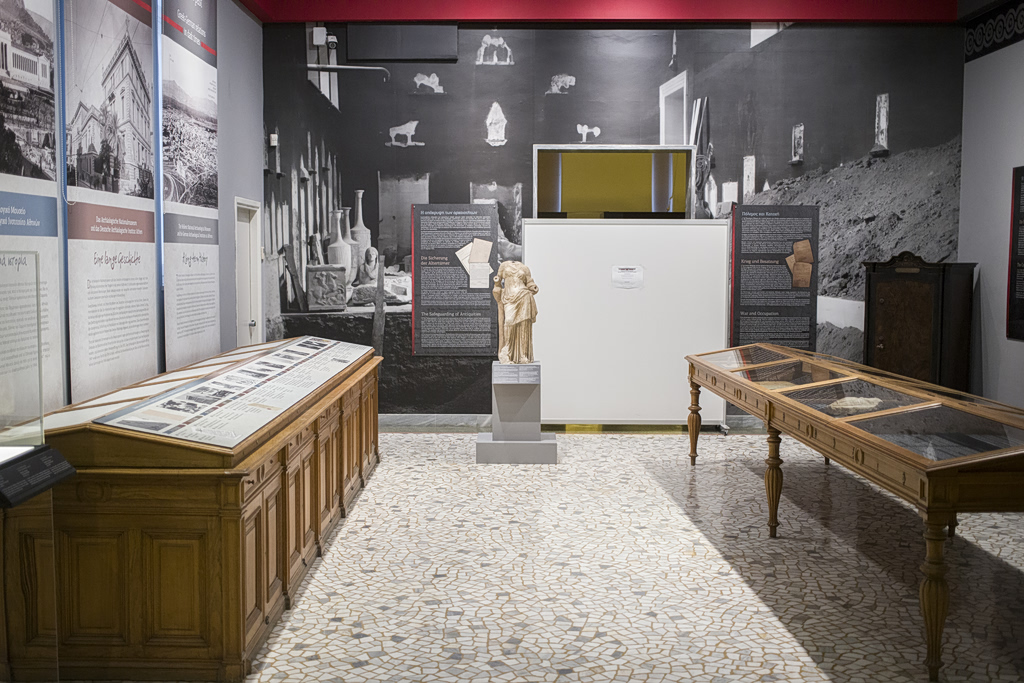
Ο εκπρόσωπος του μουσείου αναφέρθηκε στο ερευνητικό πρόγραμμα μεταξύ του ΕΑΜ και του Γερμανικού Αρχαιολογικού Ινστιτούτου, το οποίο οδήγησε στην έκθεση «Διαιρεμένο παρελθόν. Ελληνογερμανικές σχέσεις σε σκοτεινούς καιρούς» που εγκαινιάστηκε στις 12 Οκτωβρίου από κοινού στους χώρους των δύο ιδρυμάτων. Στην εισήγησή του έγινε εκτενής αναφορά στην κατάσχεση του ελληνικού κράτους στο κτίριο του DAI στην Αθήνα και στο σπίτι του Βάλτερ Βρέντε στη Φιλοθέη καθώς και στη δύσκολη σχέση των Ελλήνων και Γερμανών αρχαιολόγων στη σκοτεινή περίοδο του πολέμου αλλά και μετά. Αλλά και στο πώς αποκαταστάθηκε η παρουσία του Γερμανικού Αρχαιολογικού Ινστιτούτου στην Αθήνα το 1951 μετά από αφόρητες πολιτικές πιέσεις προς την ελληνική κυβέρνηση, σε εποχές ακόμα ταραγμένες.
Η διευθύντρια του DAI Κάτια Σπορν στη δική της εισήγηση ανέφερε ότι νέα αρχεία προσθέτουν περισσότερες για τη δράση του Βρέντε, αναφέροντας τα ημερολόγιά του. Ανέλυσε επίσης τη δραστηριότητα του ιδρύματος την περίοδο 1941-1944, τη σχέση του με το χιτλερικό Βερολίνο και με παράνομες ανασκαφές στην Κρήτη, αλλά και τη δράση Γερμανών αρχαιολόγων στην Ελλάδα. Στο τέλος της εισήγησής της τόνισε: «Αυτή η περίοδος αντιπροσωπεύει το πιο σκοτεινό και προβληματικό κεφάλαιο στην ιστορία του Γερμανικού Αρχαιολογικού Ινστιτούτου στην Ελλάδα. Η συνεργασία με Έλληνες και ξένους αρχαιολόγους ήταν επίπονη, η παρακμή ραγδαία και το επιστημονικό έργο ισχνό. Ο διττός ρόλος του Βρέντε στη διεύθυνση και στο ναζιστικό κόμμα προκάλεσε τεράστια ζημιά».
Οι κλοπές και οι καταστροφές που οι στρατιώτες της Βέρμαχτ και των SS προκάλεσαν σε μουσεία και μνημεία, οι παράνομες ανασκαφές και η φυγάδευση των ευρημάτων εκτός Ελλάδας, ήταν μερικές από τις πιο μαύρες σελίδες της κατοχικής περιόδου. Στο συνέδριο αναφέρθηκαν οι προσπάθειες του Υπουργείου Πολιτισμού να επαναπατρίσει τους λεηλατημένους θησαυρούς μας. Χαρακτηριστική είναι η επιστροφή ενός τεράστιου μέρους πάνω από 10.000 αρχαίων αντικειμένων, οστράκων και λίθινων εργαλείων από παράνομες ναζιστικές ανασκαφές στη Θεσσαλία, που ολοκληρώθηκαν το 2014.
Στο αρχαιολογικό συνέδριο πήραν μέρος 35 ξένοι και Έλληνες ομιλητές, διήρκεσε 22 ώρες και οδήγησε σε 20 ανακοινώσεις συγκεντρώνοντας το ενδιαφέρον επιστημόνων που το παρακολούθησαν από κοντά ή διαδικτυακά. Η Κάτια Σπορν μας είπε μετά το πέρας των εργασιών ότι οδήγησε σε νέα στοιχεία για την περίοδο της Κατοχής στην Ελλάδα. «Σήμερα έχουμε πιο ακριβή στοιχεία και μια πιο συνολική εικόνα μέσα από την πρόσβαση σε πολλαπλά αρχεία, ελληνικά, γερμανικά, ιταλικά, βουλγαρικά, γαλλικά αγγλικά, αυστριακά, σουηδικά και αμερικανικά. Ήταν πολύ σημαντικό ότι είχαμε την ευκαιρία να τα δούμε μαζί, σε επικοινωνία μεταξύ τους», κατέληξε.
Ο δημοσιογράφος που πιστώνεται 17 Πούλιτζερ μιλά για τις προκλήσεις που αντιμετωπίζουν τα παραδοσιακά ΜΜΕ, για την επίδραση της προεδρίας Τραμπ, για τα λάθη των Δημοκρατικών αλλά και για τον Τζεφ Μπέζος
Οντίν Λιναρδάτου
12–15 λεπτά
Ο Μάρτιν Μπάρον είναι ο θρυλικός διευθυντής των εφημερίδων «The Washington Post», «The Boston Globe» και «Miami Herald». Ο Μπάρον οδήγησε επανειλημμένως τους δημοσιογραφικούς οργανισμούς που διηύθυνε στην κατάκτηση βραβείων Πούλιτζερ σε κάποιες από τις πιο ταραχώδεις περιόδους της πολιτικής ιστορίας.
Η αποκάλυψη του σκανδάλου σεξουαλικής κακοποίησης στην Καθολική Εκκλησία το 2003 έπειτα από έρευνα της ομάδας «Spotlight» ξεσκέπασε τη συστηματική συγκάλυψη των εγκλημάτων παιδεραστίας από την Αρχιεπισκοπή της Βοστώνης.
Για αυτό το ρεπορτάζ η «Boston Globe» πήρε το κορυφαίο βραβείο στην κατηγορία Κοινωνικής Προσφοράς. O Μπάρονέπαιξε καθοριστικό ρόλο στην έναρξη και την καθοδήγηση της έρευνας. Η εφημερίδα υπό τη διεύθυνσή του πήρε άλλα έξι Πούλιτζερ.
Τον Ιανουάριο του 2013 ανέλαβε τη διεύθυνση της «Washington Post» και υπό την καθοδήγησή του η εφημερίδα κέρδισε 11 Πούλιτζερ. Το πρώτο το 2014 γιατη δημοσιοποίηση των απόρρητων εγγράφων του Εντουαρντ Σνόουντεν, που αποκάλυψαν το μυστικό δίκτυο παρακολουθήσεων της Εθνικής Υπηρεσίας Ασφαλείας των ΗΠΑ, και το τελευταίο το 2022 για την εξαντλητική ζωντανή κάλυψη των γεγονότων της εισβολής στο Καπιτώλιο στις 6 Ιανουαρίου του 2021, η οποία ξεκίνησε και οργανώθηκε υπό τη δική του καθοδήγηση, αν και είχε συνταξιοδοτηθεί όταν το Πούλιτζερ Δημόσιας Υπηρεσίας απονεμήθηκε στη συντακτική ομάδα της εφημερίδας.
Με φόντο τη Στοά του Αττάλου στην Αθήνα, συναντηθήκαμε με τον Μάρτιν Μπάρον για να συζητήσουμε ένα πολύ επίκαιρο κρίσιμο θέμα: την επιβίωση της αμερικανικής δημοκρατίας. Σε μια πλούσια και περιεκτική συζήτηση, ανέλυσε την αποτυχία των κυρίαρχων κομμάτων να κατανοήσουν την αγωνία των ψηφοφόρων, την κρίση εμπιστοσύνης στα παραδοσιακά μέσα ενημέρωσης και τους λόγους για τους οποίους εκτιμά ότι η αναταραχή που έχει φέρει η προεδρία του Ντόναλντ Τραμπ πιθανότατα θα συνεχιστεί και μετά την αποχώρησή του από τον Λευκό Οίκο.
Με τον λαϊκισμό και την Ακροδεξιά να ενισχύονται στην Ευρώπη και τις ΗΠΑ, θεωρείτε ότι τα παραδοσιακά μέσα ενημέρωσης έχουν ευθύνη να βοηθήσουν τον κόσμο να κατανοήσει τους κινδύνους που ελλοχεύουν για τη δημοκρατία;
«Τα μέσα ενημέρωσης έχουν υποχρέωση να παρέχουν στο κοινό πληροφόρηση για όσα έχει ανάγκη και δικαιούται να γνωρίζει για την κυβέρνηση της χώρας του, για τα πρόσωπα και τους φορείς που ασκούν την εξουσία, ώστε να μπορούν οι ίδιοι οι πολίτες να αποφασίζουν σε μια δημοκρατία τι θα πράξουν.
Στις Ηνωμένες Πολιτείες τα παραδοσιακά μέσα ενημέρωσης έχουν κάνει πολύ καλή δουλειά. Στην πραγματικότητα, όλα όσα γνωρίζουμε για τον Τραμπ προέρχονται κυρίως από παραδοσιακούς δημοσιογράφους: το επίπεδο της διαφθοράς, οι προσπάθειες χειραγώγησης των εκλογών, οι παραβιάσεις του κράτους δικαίου, το τι συμβαίνει με τον πόλεμο στο Ιράν. Και οι δημοσιογράφοι μας συνεχίζουν να κάνουν τη δουλειά τους παρά τις τεράστιες πολιτικές πιέσεις.
Και παρ’ όλο που ο Τραμπ ισχυρίζεται ότι η προεδρία του είναι η “πιο διαφανής που υπήρξε ποτέ”, αυτό δεν είναι αλήθεια. Είναι πάντα διαθέσιμος να μιλήσει δημόσια, αλλά δεν λειτουργεί με διαφάνεια. Υπάρχει διαφορά ανάμεσα στη διαθεσιμότητα και τη διαφάνεια.
Και υπάρχει διαφορά ανάμεσα στο να είσαι διαθέσιμος και στο να λες την αλήθεια, όπως ακριβώς το να είσαι διαθέσιμος και το να σέβεσαι το Σύνταγμα είναι δύο διαφορετικά πράγματα. Δεν σέβεται το Σύνταγμα. Δεν σέβεται το κράτος δικαίου και δεν λειτουργεί με διαφάνεια.
Οι πολίτες είναι αυτοί που θα αποφασίσουν τι πρέπει να γίνει. Τα μέσα ενημέρωσης μπορούν μόνο να πουν στον κόσμο τι συμβαίνει και στη συνέχεια εναπόκειται στους πολίτες να αποφασίσουν.
Επίσης, υπάρχουν και άλλες παράμετροι. Πρέπει, λοιπόν, να αναρωτηθεί κανείς: Γιατί επανεξελέγη ο Τραμπ; Σε μεγάλο βαθμό, η επανεκλογή του συνδέεται με τον τεράστιο όγκο των μεταναστευτικών ροών, των εισροών παράτυπων μεταναστών από τα νότια σύνορα και τον πολύ υψηλό πληθωρισμό».
Γιατί πιστεύετε ότι τόσο πολλοί απλοί ψηφοφόροι στρέφονται στην Ακροδεξιά και σε ηγέτες όπως ο Τραμπ; Τι αποτυγχάνουν να κατανοήσουν οι κυρίαρχοι πολιτικοί φορείς;
«Ολοι θυμόμαστε την – τουλάχιστον ατυχή – διατύπωση της Χίλαρι Κλίντον που αποκάλεσε τους ανθρώπους αυτούς “αξιοθρήνητους”. Δεν μπορείς να αποκαλείς τους ανθρώπους αξιοθρήνητους. Μπορεί να διαφωνείς με τις πολιτικές τους θέσεις, αλλά είναι απλοί άνθρωποι του μόχθου, που αγωνίζονται να βγάλουν τα προς το ζην, να προκόψουν, να εξασφαλίσουν μια καλύτερη ζωή για τα παιδιά τους, να ζήσουν με ασφάλεια – όλα τα φυσιολογικά πράγματα που επιθυμούν οι άνθρωποι για τον εαυτό τους και την οικογένειά τους.
Hταν τρομερό λάθος του Δημοκρατικού Κόμματος και της κυβέρνησης Μπάιντεν να επιτρέψουν την εισροή τεράστιου αριθμού μεταναστών – ενός εκατομμυρίου ανθρώπων τον χρόνο. Πόσες χώρες μπορούν να απορροφήσουν τέτοιες ροές και πόσες κοινωνίες θα το ανεχτούν;
Το Μεταναστευτικό, λοιπόν, είναι ένα εξαιρετικά κρίσιμο και καθοριστικό ζήτημα, όπως και ο πληθωρισμός και η οικονομία γενικότερα. Η άνοδος των τιμών γίνεται άμεσα αισθητή και δυσκολεύει ακόμα περισσότερο την καθημερινότητα των πολιτών.
Τώρα όμως αυτός που πλήττεται από τις υψηλές τιμές είναι ο Τραμπ και δεν τον βοηθάει ούτε η μεταναστευτική του πολιτική, λόγω του τρόπου με τον οποίο την έχει εφαρμόσει και λόγω της σκληρότητας που τη συνοδεύει».
Ανησυχείτε για το γεγονός ότι οι άνθρωποι ενημερώνονται όλο και περισσότερο από τα μέσα κοινωνικής δικτύωσης; Πώς μπορούν να γνωρίζουν τι είναι αλήθεια και τι όχι;
«Και από τα chatbots τώρα, πολύ. Οπότε, ναι, ανησυχώ για αυτό. Για να είναι κανείς ένα πραγματικά ενημερωμένο μέλος της κοινωνίας, ένας πλήρως ενεργός πολίτης, πρέπει να είναι καλά πληροφορημένος. Και είναι πολύ δύσκολο να είσαι καλά πληροφορημένος όταν έχεις απλώς παρακολουθήσει ένα βίντεο 15 δευτερολέπτων για ένα θέμα.
Επειδή ένα θέμα τόσο περίπλοκο όσο η Μέση Ανατολή, και πολλά άλλα πέρα από αυτό, δεν μπορεί να εξηγηθεί σε ένα βίντεο 15 δευτερολέπτων στο TikTok. Κι έπειτα, οι άνθρωποι εμπιστεύονται άτομα που δεν είναι απαραιτήτως άξια εμπιστοσύνης. Τα άτομα αυτά επικοινωνούν με αμεσότητα και αυθεντικότητα, φαίνονται αυθεντικά, κι έτσι ο κόσμος τα θεωρεί έγκυρες πηγές. Στη δική μας δουλειά, ως δημοσιογράφοι, εστιάζαμε ανέκαθεν στην εγκυρότητα, στην επαλήθευση των πληροφοριών μας.
Αλλά δεν έχουμε εστιάσει ιδιαίτερα στην αυθεντικότητα και την αμεσότητα και δεν επικοινωνούμε αποτελεσματικά με το κοινό, όπως για παράδειγμα πολλοί influencers. Αυτό θα δίνει πάντα πλεονέκτημα σε αυτά τα άλλα πρόσωπα, εκτός αν αλλάξουμε τις συνήθειές μας και αρχίσουμε να εστιάζουμε στην αυθεντικότητά μας. Πιστεύω όμως ότι είναι ανησυχητικό, γιατί σήμερα ζούμε σε μια κοινωνία όπου δεν βασιζόμαστε όλοι σε ένα κοινό σύνολο δεδομένων, στα ίδια γεγονότα.
Και λέω συνέχεια ότι, στην πραγματικότητα, η κατάσταση είναι ακόμα χειρότερη, επειδή δεν μπορούμε καν να συμφωνήσουμε στο πώς ορίζεται ένα γεγονός· κι αυτό συμβαίνει επειδή τα στοιχεία που χρησιμοποιούμε παραδοσιακά, από την εποχή του Διαφωτισμού, για να ορίσουμε τα γεγονότα έχουν όλα απαξιωθεί, δυσφημηστεί, αμφισβητηθεί και απορριφθεί πλήρως.
Ποια είναι τα στοιχεία αυτά; Η παιδεία, η τεχνογνωσία, η εμπειρία – δύο ειδών: όσα έχεις ζήσει ο ίδιος αλλά και το πόσο καιρό βρίσκεσαι στον χώρο – και, τελευταίο και σημαντικότερο, τα πραγματικά τεκμήρια. Αν και οι άνθρωποι μερικές φορές αρνούνται ακόμη και αυτό που βλέπουν με τα ίδια τους τα μάτια και ακούν με τα ίδια τους τα αφτιά».
Θα ήταν μια λύση για τις μεγάλες εφημερίδες, όπως η «Washington Post», οι «New York Times», η «Wall Street Journal», να έχουν τους δικούς τους influencers;
«Νομίζω ότι είναι μια καλή ιδέα. Πιστεύω ότι πρέπει να το κάνουμε. Απολύτως. Είναι σημαντικό να εντοπίσουμε στο δυναμικό μας πρόσωπα που έχουν την ικανότητα να επικοινωνούν αποτελεσματικά με το κοινό. Ορισμένοι, μάλιστα, έχουν ήδη αρχίσει να το κάνουν. Και, ασφαλώς, πολλοί οργανισμοί – για παράδειγμα οι “New York Times” – δίνουν μεγάλη έμφαση στα βίντεο και προτρέπουν το προσωπικό τους να χρησιμοποιεί βίντεο και τους βοηθούν να μάθουν να το κάνουν σωστά.
Όλοι οι εµπλεκόµενοι στα σκάνδαλα αυτά αναφέρουν ή επικαλούνται το Μαξίµου ως υψηλή προστασία. Γιατί;
Η αποκάλυψη των ηµερών, ότι στο ελληνικό µπάσκετ έχει στηθεί µια υπόγα κατά τα πρότυπα της παλιάς παράγκας του ποδοσφαίρου, θεωρητικά δεν είναι είδηση. Στη χώρα της διαφθοράς δεν υπάρχουν νησίδες εντιµότητας (δυστυχώς ούτε η δηµοσιογραφία έχει τέτοιο ρόλο) ούτε και αυταπάτες για το τι συµβαίνει. Το όνοµα του Βαγγέλη Λιόλιου, προέδρου της Ελληνικής Οµοσπονδίας Καλαθοσφαίρισης (ΕΟΚ), υπερνίκησε σε δηµοσιότητα το όνοµα της γνωστής συνεπώνυµης αοιδού η οποία είναι αθώα κάθε εγκλήµατος, ενώ ο πρόεδρος και «γαλάζιος» σωτήρας του ελληνικού µπάσκετ οδηγήθηκε µε χειροπέδες ενώπιον του εισαγγελέα και ανακριτή.
Ο άγνωστος Βαγγέλης Λιόλιος ανέλαβε πρόεδρος της οµοσπονδίας ύστερα από µια βολική νοµοθετική και φωτογραφική ρύθµιση του Λευτέρη Αυγενάκη (ναι, πάλι ο Αυγενάκης) που έθετε όριο ηλικίας στην εκλογή κι έτσι απέκλεισε λόγω ηλικίας τον αντίπαλό του στις εκλογές. Εδώ έχουµε την πρώτη σύµπτωση κυβερνητικής εµπλοκής. Σε µια ακολουθία συµπτώσεων ο διαιτητής που πιάστηκε µε 820.000 ευρώ µετρητά στο σπίτι του και κατηγορείται για δωροληψία ήταν συνοδοιπόρος του Κυριάκου Μητσοτάκη σε µια πρόσφατη επικοινωνιακή καµπάνια πεζοπορίας του πρωθυπουργού στον Ολυµπο. Ο Μητσοτάκης, σε ακόµη µια σύµπτωση, εµφανίζεται, πάλι σε επικοινωνιακή του καµπάνια, να φορά τη φανέλα της οµάδας µπάσκετ του Προµηθέα, που βρίσκεται στο επίκεντρο των αποκαλύψεων ως πρώην οµάδα του Λιόλιου και µοχλός στηµένων παιχνιδιών. Ο Κυριάκος Μητσοτάκης έπαιξε µπάσκετ µε τη φανέλα του Προµηθέα λίγο προτού µιλήσει σε επετειακή εκδήλωση για την εφηµερίδα «Γνώµη», τρεις µήνες πριν από τις εκλογές του 2019. Στην τρίτη και φαρµακερή σύµπτωση, όπως αποκαλύπτει σήµερα το Documento, ένα από τα µέλη του κυκλώµατος, σε τηλεφωνικές συνοµιλίες µε διαιτητή µε τον οποίο φέρονται να στήνουν παιχνίδια, του στέλνει µηνύµατα µε φωτογραφίες από το εσωτερικό του Μεγάρου Μαξίµου ως απόδειξη της στενής σχέσης του µε το πρωθυπουργικό περιβάλλον.
Οταν ο Βαγγέλης Λιόλιος ανέλαβε πρόεδρος της ΕΟΚ αυτοαναγορεύτηκε σε πρόσωπο κάθαρσης του ελληνικού µπάσκετ. Αποδείχτηκε όµως ότι όπου ακούς πολλά κεράσια πρέπει να κρατάς µικρό καλάθι, ειδικά του µπάσκετ.
Οσα βλέπουν το φως της δηµοσιότητας είναι συγκλονιστικά. Χορός εκατοµµυρίων, στηµένα παιχνίδια, µετρητά σε σπίτια διαιτητών και συνοµιλίες καταγεγραµµένες από τον επίσηµο κοριό ο οποίος αποκαλύπτει ένα τσούρµο από αλήτες που εµφανίζονται στην κοινωνία ως παράγοντες και ταγοί.
Συγκλονιστικά αλλά όχι άγνωστα και µη αναµενόµενα. Κανένα κοµµάτι διαφθοράς σε αυτήν τη χώρα δεν θα µπορούσε ούτε να εµφανιστεί ούτε να επιβιώσει χωρίς την προστασία από την πολιτική και τις επίσηµες αρχές. Οι επισκέψεις και οι συνοµιλίες από το Μέγαρο Μαξίµου επιβεβαιώνουν αυτό τον κανόνα. Τα επιτυχή τρίποντα της διαφθοράς στο µπάσκετ στηρίζονται στο στηµένο παιχνίδι µε την εξουσία. Αυτό άλλωστε γεννούσε την αλαζονεία και την αυτοπεποίθηση των µελών του κυκλώµατος, που έφτασαν στο σηµείο να επιχειρούν την εξόντωση όσων τους είχαν καταγγείλει. Θυµίζω ότι η Επιτροπή Φιλάθλου Πνεύµατος, Ηθικής και ∆εοντολογίας της Ελληνικής Ολυµπιακής Επιτροπής είχε καλέσει ως πειθαρχικά ελεγκτέο τον ιδιοκτήτη της ΚΑΕ Αµαρουσίου ∆ήµο Στασινόπουλο που είχε κάνει καταγγελίες για τον ρόλο του Βαγγέλη Λιόλιου, την ώρα που ο εισαγγελέας έβγαζε τα εντάλµατα σύλληψης.
Υπάρχει ωστόσο µια µάλλον αθέατη πλευρά στο Basket-gate, που είναι η πιο σοβαρή από όλες. Το κύκλωµα δεν έστηνε µόνο επαγγελµατικούς αγώνες στο µπάσκετ αλλά και σχολικά πρωταθλήµατα. Στόχος ήταν να παρέµβουν στον µοναδικό ίσως αδιάβλητο θεσµό στην Ελλάδα, αυτό των πανελλαδικών εξετάσεων για την εισαγωγή στα πανεπιστήµια. Οι οµάδες που νικούσαν στις µαθητικές διοργανώσεις µε στηµένους αγώνες εξασφάλιζαν στους µαθητές-παίκτες µοριοδότηση λόγω αθλητικών επιδόσεων, ώστε να παρακάµψουν άλλους και να εισαχθούν σε πανεπιστήµια. Πρόκειται για ανήθικη πρακτική, η οποία στις ΗΠΑ είναι γνωστή ως κόλπο της «πίσω πόρτας». Το κόλπο εισήχθη και στην Ελλάδα µε πρωταγωνιστές τους θεσµικούς παράγοντες της ΕΟΚ και διαιτητές.
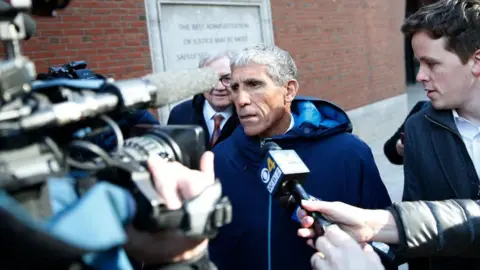
Στις 12 Μαρτίου 2019 ο Γουίλιαµ Ρικ Σίνγκερ, επικεφαλής συµβουλευτικής εταιρείας για την εισαγωγή φοιτητών, συνελήφθη επειδή εισέπραττε µεγάλα ποσά για να κατασκευάζει ψεύτικα βιογραφικά και αθλητικές επιδόσεις ώστε γόνοι ισχυρών οικογενειών να εισάγονται σε µεγάλα αµερικανικά πανεπιστήµια, όπως το Γέιλ, το Στάνφορντ, το UCLA, το Πανεπιστήµιο του Τέξας. Οι προπονητές δωροδοκούνταν ώστε να βεβαιώσουν επιδόσεις και να εισηγηθούν την εισαγωγή εµφανίζοντάς τους ως αθλητές υψηλών επιδόσεων. Η ηθοποιός Λόρι Λάφιν και ο σύζυγός της, σχεδιαστής µόδας Μόσιµο Τζιανούλι, η ηθοποιός Φελίσιτι Χάφµαν και αρκετοί ακόµη σταρ του Χόλιγουντ ήταν από αυτούς που δωροδόκησαν το κύκλωµα για να ανοίξει η πίσω πόρτα στα πανεπιστήµια.
Η µέθοδος αντιγράφτηκε από το κύκλωµα του µπάσκετ στην Ελλάδα. Τα στηµένα παιχνίδια έβγαζαν πρωταθλητές και άνοιγε η παράνοµη, τελικώς, πόρτα για τα πανεπιστήµια. Ηταν από τις πιο ανήθικες δράσεις του κυκλώµατος. Αντί µεγάλης αµοιβής παιδιά που άξιζαν να µοριοδοτηθούν, ώστε να έχουν θέση στα πανεπιστήµια ως πρωταθλητές, βρίσκονταν εκτός και τη θέση τους έπαιρναν οι πρωταθλητές των στηµένων παιχνιδιών.
Το τραγικό είναι ότι επί χρόνια γονείς και µπασκετικοί παράγοντες έβλεπαν µπροστά στα µάτια τους να εξελίσσεται η κοµπίνα και έκαναν δηµόσιες καταγγελίες. Οι καταγγελίες έφτασαν και στο υπουργείο Παιδείας και ζητούσαν να γίνει έλεγχος στα µαθητικά πρωταθλήµατα.
Φυσικά καµιά έρευνα δεν έγινε. Το κύκλωµα, παντοδύναµο, ανέγγιχτο και αλαζονικό, άλωσε κάθε πλευρά του ελληνικού µπάσκετ. Το γεγονός ότι η απλή έρευνα σε σπίτια αυτών που φέρονται ως εγκληµατικοί παράγοντες του µπάσκετ αποκάλυψε γύρω στο ένα εκατοµµύριο ευρώ είναι η απόδειξη για το πόσο ασφαλείς αισθάνονταν, χωρίς άγχος να κρύψουν και να κρυφτούν. ∆εν ήταν οι εξωνηµένοι που διακατέχονταν από το άγχος της αποκάλυψης, αλλά η πραγµατική εξουσία που δεν διέτρεχε κανέναν κίνδυνο.
Ο συλληφθείς Γιώργος Μαυραγάνης είναι στενός φίλος του Βαγγέλη Λιόλιου και σχετιζόµενος µε τις επιχειρήσεις καφέ που έχει ο πρόεδρος της ΕΟΚ. ∆εν έχει δηλαδή κανέναν θεσµικό ρόλο. Παρ’ όλα αυτά επισκέπτεται το Μέγαρο Μαξίµου και όχι µόνο κοµπάζει για τις κυβερνητικές επαφές του που τον βοηθούν στο «έργο» του σε σχέση µε όσα κάνει στο µπάσκετ, αλλά στέλνει και αποδεικτικά στοιχεία: φωτογραφίες από το Μέγαρο Μαξίµου, το κυβερνητικό µέγαρο δηλαδή. Ο κατηγορούµενος ως βασικός κρίκος στο κύκλωµα φαίνεται ότι µπορούσε (και το έκανε) να καυχάται ότι ανήκει σε µια αλυσίδα εξουσίας που του παρείχε κάλυψη.
Ο πρωθυπουργός οφείλει να απαντήσει για τις συµπτώσεις που τον συνδέουν µε ανθρώπους του κυκλώµατος. Αλλά και σε ακόµη µια σύµπτωση: το Μέγαρο Μαξίµου επί των ηµερών του συνδέεται άµεσα και µάλιστα µέσω επίσηµων συνακροάσεων µε τις δικογραφίες για τα Τέµπη, τον ΟΠΕΚΕΠΕ, τις υποκλοπές, τις πολεοδοµίες και τώρα πλέον το Basket-gate. Ολοι οι εµπλεκόµενοι στα σκάνδαλα αυτά αναφέρουν ή επικαλούνται το Μαξίµου ως υψηλή προστασία. Γιατί;
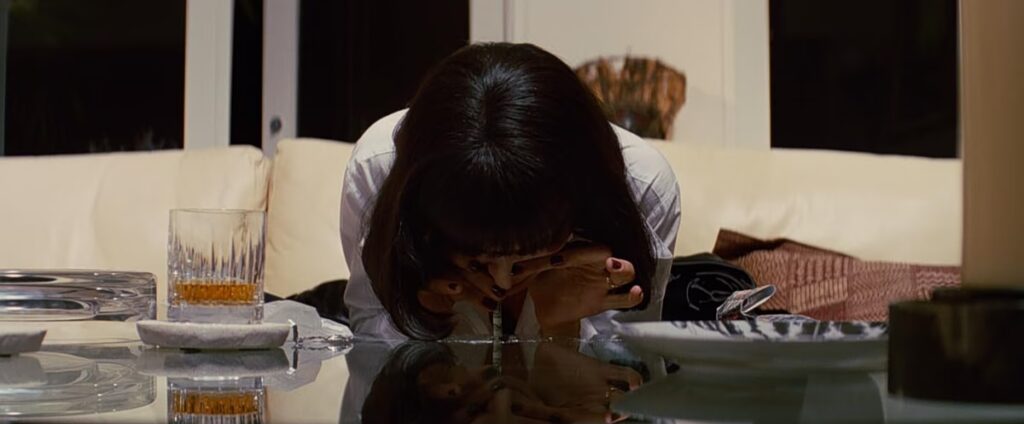
Η κοκαΐνη δεν αποτελεί πλέον μόνο μέρος της νυχτερινής διασκέδασης στη Βρετανία, αλλά φαίνεται να έχει περάσει στην καθημερινότητα εργαζομένων και ανθρώπων διαφορετικών κοινωνικών στρωμάτων. Η κατανάλωση στην Αγγλία εκτιμάται ότι έφτασε τους 123 τόνους το 2024-2025, αυξημένη κατά 26% σε σχέση με το 2021, ενώ η παράνομη αγορά αποτιμάται σε σχεδόν 10 δισ. λίρες.
Μια κοινωνία που απαιτεί διαρκώς υψηλές ταχύτητες, παραγωγικότητα και αντοχή φαίνεται να δημιουργεί το κατάλληλο έδαφος για την εξάπλωση ενός από τα πιο εθιστικά διεγερτικά ναρκωτικά. Στη Βρετανία, η κοκαΐνη δεν περιορίζεται πλέον στα πάρτι και στα κλειστά περιβάλλοντα της οικονομικής ελίτ. Εμφανίζεται στις τουαλέτες των συνοικιακών παμπ, στα μουσικά φεστιβάλ, αλλά και σε επαγγελματικούς χώρους, όπου ορισμένοι καταφεύγουν σε αυτήν για να ανταπεξέλθουν στην πίεση και την εξάντληση.
Το μέγεθος του φαινομένου αποτυπώνει δημοσιογραφική έρευνα του Guardian, σύμφωνα με την οποία η κατανάλωση κοκαΐνης στην Αγγλία υπολογίζεται σε 123 τόνους για την περίοδο 2024-2025. Πρόκειται για αύξηση 26% σε σύγκριση με το 2021, βάσει αναλύσεων λυμάτων.
Η ποσότητα αντιστοιχεί σε περίπου 2,5 δισεκατομμύρια «γραμμές» κοκαΐνης, με εκτιμώμενη αξία στη μαύρη αγορά σχεδόν 10 δισεκατομμυρίων λιρών.
Πίσω από τους αριθμούς βρίσκεται ένα φαινόμενο με ευρύτερες κοινωνικές συνέπειες. Η διακίνηση συνδέεται με οργανωμένα εγκληματικά δίκτυα, βία και εκμετάλλευση, ενώ η αυξημένη χρήση προκαλεί ανησυχία για τη δημόσια υγεία. Παράλληλα, ξεχωριστή έρευνα του Guardian καταγράφει άνοδο των αστυνομικών περιστατικών στα οποία γίνεται αναφορά στην κοκαΐνη.
Από την κοινωνική ελίτ στις συνοικιακές παμπ
«Από ναρκωτικό της κοινωνικής ελίτ, κατέληξε να είναι κάτι που καταναλώνεται πάνω στο καζανάκι της τουαλέτας μιας συνοικιακής παμπ».
Με αυτή τη φράση, ο Μάρτιν Γκάλαχερ, ειδικός στο οργανωμένο έγκλημα και πρώην αστυνομικός στη Σκωτία με 28 χρόνια υπηρεσίας, περιγράφει στον Guardian την αλλαγή που έχει σημειωθεί στη χρήση της ουσίας.
Η κοκαΐνη εξακολουθεί να συνδέεται με εύπορα κοινωνικά περιβάλλοντα, ωστόσο η ευκολότερη πρόσβαση και η πτώση των τιμών έχουν διευρύνει σημαντικά το κοινό της.
Χαρακτηριστική είναι η εικόνα σε παμπ στο ανατολικό Λονδίνο, την οποία επισκέπτονται κάτοικοι της περιοχής και οπαδοί της Γουέστ Χαμ. Η υπεύθυνη του καταστήματος αναφέρει ότι σχεδόν κάθε πρωί καλείται να καθαρίζει υπολείμματα κοκαΐνης από τις τουαλέτες.
«Είναι πραγματικά συγκλονιστική η ποσότητα που κυκλοφορεί και το πόσο εύκολα μπορεί κανείς να τη βρει», λέει, εκτιμώντας ότι η κατάσταση έχει επιδεινωθεί αισθητά τα τελευταία πέντε χρόνια.
Αυτό που την ανησυχεί ιδιαίτερα είναι ότι αρκετοί πελάτες δεν επιχειρούν καν να κρύψουν τη χρήση. Η νευρικότητα, οι επανειλημμένες επισκέψεις στις τουαλέτες και οι απότομες μεταβολές στη συμπεριφορά είναι ορισμένα από τα σημάδια που, όπως περιγράφει, έχει μάθει να αναγνωρίζει.
Πρόσθετη ανησυχία προκαλεί ο συνδυασμός κοκαΐνης και αλκοόλ. Ορισμένοι χρήστες θεωρούν λανθασμένα ότι η κοκαΐνη μπορεί να τους βοηθήσει να ξεμεθύσουν και να συνεχίσουν να πίνουν.
Η ίδια εικόνα, σύμφωνα με την υπεύθυνη, εμφανίζεται τόσο σε οικονομικές παμπ όσο και σε ακριβά εστιατόρια. Πολλοί επαγγελματίες αποφεύγουν, πάντως, να μιλήσουν δημόσια για το ζήτημα, καθώς φοβούνται πιθανές επιπτώσεις στις άδειες λειτουργίας των επιχειρήσεών τους.
Η κοκαΐνη στα φεστιβάλ και στις μεγάλες διοργανώσεις
Η εξάπλωση της ουσίας αποτυπώνεται και στα μουσικά φεστιβάλ. Σε διοργάνωση στη Λέικ Ντίστρικτ, η 30χρονη Λίζα, εργαζόμενη ως νοσηλεύτρια σε κτηνιατρείο στο Γκέιτσχεντ, παρακολουθεί τους Scissor Sisters, έχοντας πάρει λίγες ημέρες άδεια για να διασκεδάσει και να γνωρίσει κόσμο.
Η ίδια παραδέχεται στους δημοσιογράφους ότι έχει κάνει χρήση κοκαΐνης. Στον ίδιο χώρο, αρκετοί ακόμη επισκέπτες αναφέρουν ότι έχουν καταναλώσει την ουσία ή προσπαθούν να την προμηθευτούν.
Παρά το γεγονός ότι η κατοχή κοκαΐνης στη Βρετανία μπορεί να τιμωρηθεί με φυλάκιση έως επτά ετών, ορισμένοι συμμετέχοντες φαίνεται να αντιμετωπίζουν τη χρήση της με αξιοσημείωτη χαλαρότητα.
Επιστημονικά δεδομένα ενισχύουν την εικόνα ότι η κατανάλωση συνδέεται με συγκεκριμένες κοινωνικές περιστάσεις. Ανάλυση δειγμάτων λυμάτων του 2022 από το Imperial College London, η οποία δημοσιοποιήθηκε το 2026, διαπίστωσε αυξημένη παρουσία κοκαΐνης κατά τη διάρκεια μεγάλων αθλητικών και μουσικών εκδηλώσεων, αργιών, ακόμη και περιόδων υψηλών θερμοκρασιών.
Τα στοιχεία δείχνουν ότι η χρήση μπορεί να αυξάνεται σε συγκεκριμένες περιστάσεις, δεν αποσαφηνίζουν όμως αν αυτό οφείλεται σε περισσότερους χρήστες ή στην κατανάλωση μεγαλύτερων ποσοτήτων από ανθρώπους που ήδη κάνουν χρήση.
Περισσότερα αστυνομικά περιστατικά με αναφορά στην κοκαΐνη
Την ίδια ώρα, η εξάπλωση της χρήσης συνοδεύεται από ανησυχητικά στοιχεία στις αστυνομικές καταγραφές.
Σύμφωνα με δεύτερη έρευνα του Guardian, το 2025 καταγράφηκαν τουλάχιστον 29.922 αδικήματα στα οποία υπήρχε αναφορά στην κοκαΐνη. Αυτό αντιστοιχεί σε 63,4 περιστατικά ανά 100.000 κατοίκους, έναντι 57,7 το 2019. Τα διαθέσιμα δεδομένα έως τον Μάιο του 2026 αφήνουν ανοιχτό το ενδεχόμενο περαιτέρω αύξησης.
Η πλειονότητα των περιστατικών αφορούσε παραβάσεις της νομοθεσίας περί ναρκωτικών. Ωστόσο, το 18% συνδεόταν με βίαια αδικήματα, μεταξύ των οποίων παρενόχληση, επίμονη παρακολούθηση και μία υπόθεση ανθρωποκτονίας.
Σχεδόν το 4% αφορούσε σεξουαλικά αδικήματα, με τις καταγραφές να περιλαμβάνουν 344 υποθέσεις βιασμού.
Ιδιαίτερη βαρύτητα έχουν και τα στοιχεία για την ενδοοικογενειακή βία. Από τον Ιούλιο του 2025 έως τον Ιούνιο του 2026, σχεδόν έξι στους δέκα ελέγχους για ναρκωτικά σε άτομα που είχαν συλληφθεί ως ύποπτα για τέτοια περιστατικά ήταν θετικοί στην κοκαΐνη.



 Il Cappotto (Το παλτό 1952) Alberto Lattuada
7.5
Renato Rascel, Yvonne Sanson, Giulio Stival .
Il Cappotto (Το παλτό 1952) Alberto Lattuada
7.5
Renato Rascel, Yvonne Sanson, Giulio Stival .